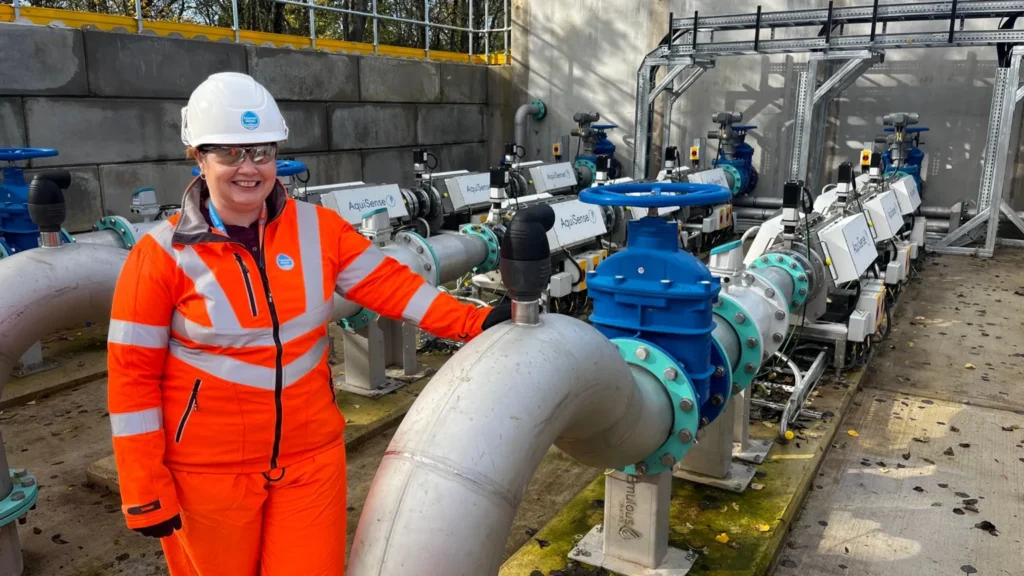
KENTUCKY, US ─ A recent BBC investigation into Britain’s bathing water quality highlights the growing need for additional wastewater treatment and the technologies being deployed to help protect the country’s waterways. Among the projects featured is a Thames Water Wastewater Treatment site near Oxford, home to the world’s largest UV-C LED water treatment installation, supplied by AquiSense Inc.
A Growing Challenge for UK Water Utilities
While much of the public discussion surrounding UK river water quality has focused on untreated sewage spills, the BBC investigation draws attention to another significant concern. Even after conventional wastewater treatment, discharged effluent can contain elevated levels of bacteria that impact downstream bathing water quality.
The BBC reports that 37% of the UK’s inland bathing sites failed to meet minimum water quality standards across the summer of 2026. Despite this, only 160 of England’s nearly 7,000 wastewater treatment works currently utilize a form of UV disinfection.
Putting UV LED Technology to Work
As part of Thames Water’s efforts to improve downstream bathing water quality, nine PearlAqua Kilo systems have been installed at a single wastewater treatment facility, representing the world’s largest UV-C LED water treatment installation to date. The systems provide an additional stage of treatment to reduce bacterial levels in treated wastewater prior to discharge.
This landmark installation marks a significant milestone for the UV industry, demonstrating that UV-C LED technology has progressed beyond smaller applications and is now being implemented at scale within municipal wastewater infrastructure.
Beyond eliminating mercury, UV-C LED technology offers instant on/off operation, flexible power control and modular system designs. These advantages provide utilities with greater operational flexibility when managing seasonal requirements, variable treatment demands and long-term operating costs.
The Future of Municipal Wastewater Treatment
As highlighted in the BBC investigation, the cost of implementing additional UV treatment systems remains a significant barrier to wider adoption across the UK. Considering both treatment performance and long-term economics will be central to future investment decisions.
The Thames Water project represents an important milestone in the evolution of UV-C LED technology. As LED efficiency continues to improve and the technology matures, there is significant potential to improve the economic viability of LED systems. Furthermore, with increasing regulatory pressure on mercury use across Europe, UV-C LEDs offer a future-ready solution for utilities investing in long-term water treatment infrastructure.
To learn more about the water quality challenges facing UK utilities and the solutions being implemented to address them, read the full BBC investigation here: https://www.bbc.com/news/articles/cm752w35lkz3o